


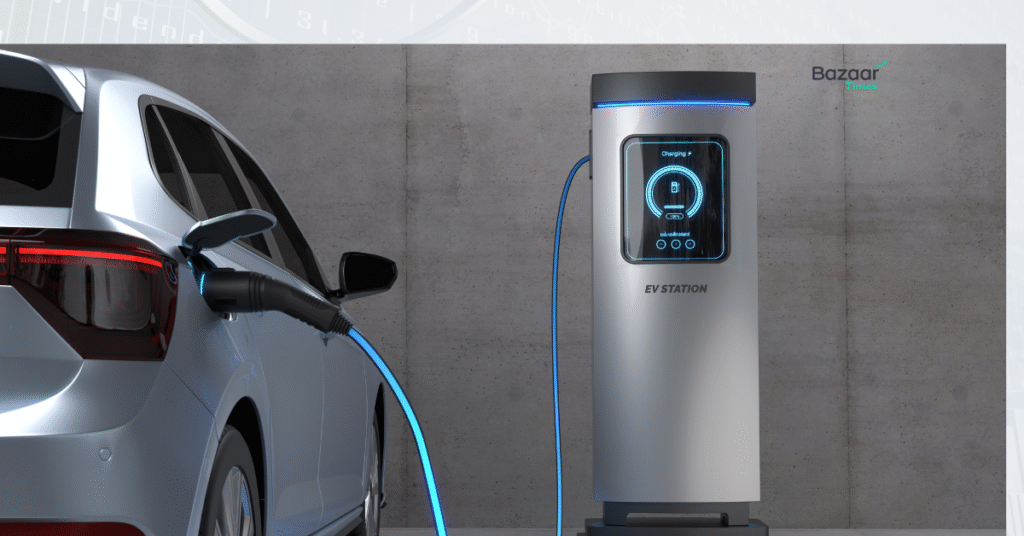
The Green Mobility Revolution of India
With India on a course to become a 5 trillion economy, one revolution is well poised to revolutionize the transportation system in India and sustainability: the electric vehicle (EV) movement.
India will be at the critical point of EV adoption in 2025. Electric cars, scooters, and buses have become a common everyday occurrence, not a luxury found in large cities anymore. The transition to green mobility is not only a necessary environmental process but also a calculated economic action that is guaranteed to entail cleaner cities, fewer oil imports, and millions of new jobs.
An Electric vehicle sales record year
The most recent statistics published by the Ministry of Heavy Industries indicate that the sale of EV population in India has reached over 25 lakh units in the previous FY 2024-25, which constitutes over 40 percent of the year-on-year increment.
- The market is dominated by two-wheelers that make up more than 60 percent of total EV sales.
- There is a 25 percent increase in electric cars, which have been dominated by the car brands of Tata Motors, Mahindra, and Hyundai.
- Government fleet programs are growing rapidly, and commercial EVs are now represented in e-buses and cargo vehicles.
The growth is a sign of the great policy backing and increasing consumer confidence in electric mobility in India.
Government Push: FAME-II and Beyond
The Indian EV revolution is supported by a strong policy framework that is headed by:
- FAME-II (Faster Adoption and Manufacturing of Electric Vehicles) -provides subsidies on two-wheelers, cars, and buses using electricity.
- The PLI Scheme on Advanced Chemistry Cells – promoting the production of lithium-ion batteries in China.
- EV Policies by State- Maharashtra, Delhi, Tamil Nadu, and Gujarat have offered incentives including road tax waivers, registration benefits, and charging subsidies.
Besides this, the government is targeting EV penetration at 30 percent by 2030 with the help of a charging network countrywide and the integration of renewable energy.
Infrastructure Building In India.
The absence of charging infrastructure is one of the most significant obstacles on the path to EV adoption, and it is being filled in at an alarming pace.
- As at mid-2025, there are installed over 15,000 public charging stations and the figure is to expand to 100,000 by 2030.
- Firms such as Tata Power, Statiq and ChargeZone are collaborating with malls, petrol pumps and highways in order to increase the access.
- The fast-charging and battery-swapping technology has decreased range anxiety among the users drastically.
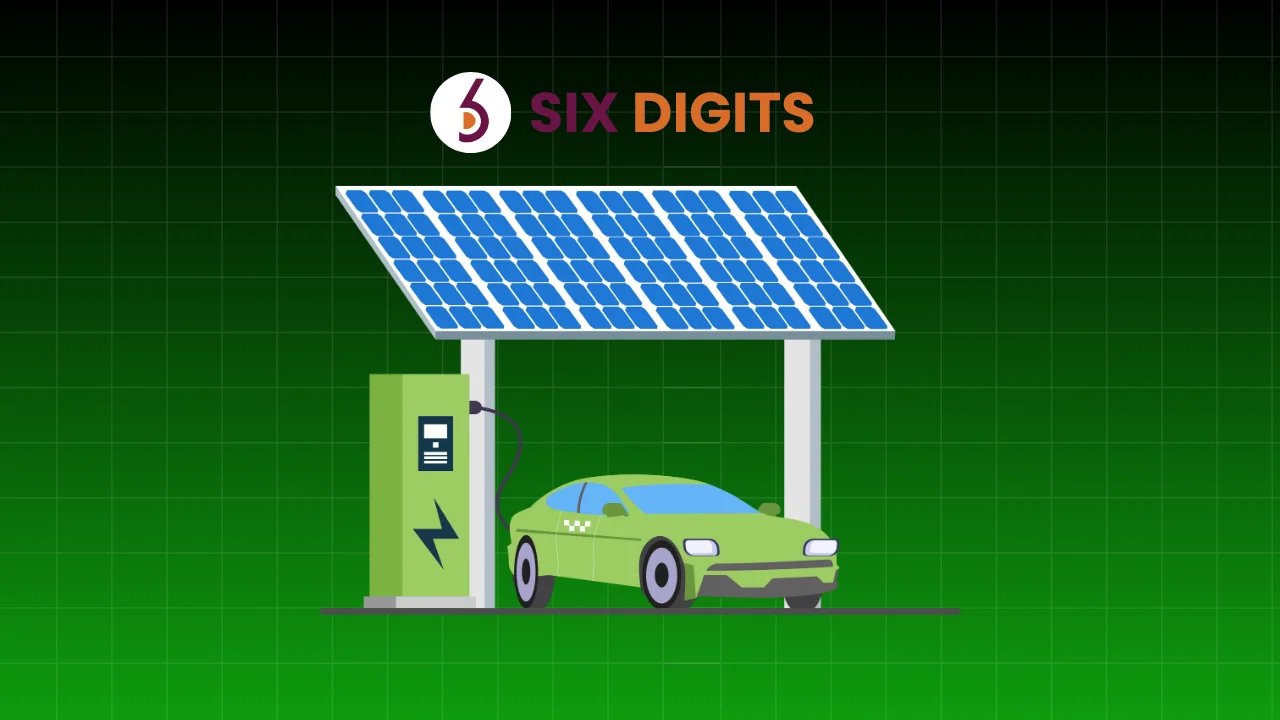
The increased number of solar-powered EV charging stations makes the development of electric mobility in India even more consistent with the national objectives of renewable energy utilization.
The Emerging Electric Two-Wheelers and EVs that are Affordable
Two-wheelers and cheap urban EVs are also the forces behind the EV revolution in India and quite literally.
Ola Electric, Ather Energy, TVS and Bajaj are among the brands reinventing personal mobility in their sleek, efficient and low-priced electric scooters.
Electric two-wheelers are currently available with:
- Reduced expenses of running (as low as 0.25 per km),
- Reduced maintenance, and
- They are very affordable because of government subsidies.
In the meantime, Tata Tiago EV, MG Comet EV, and Citroen eC3 have put electric cars within the reach of a middle-class consumer and narrowed the price gap.
Sustainability vs. Economic Development.
On the way to a low-carbon economy, electric vehicles are taking center stage in India. The positive effect on the environment can be seen already:
- One electric car has the capacity of saving 4-5 tonnes of CO₂ each year.
- A NITI Aayog estimate shows that EV adoption has already cut the annual oil import bill of India by almost 2 billion dollars.
- It is projected that renewable energy can be used in EV charging and will remove more than 100 million tonnes in the amount of carbon emissions by 2030.
In addition to sustainability, the EV ecosystem is generating gigantic job opportunities in the manufacturing sector, battery recycling sector, logistics, and infrastructure.
Local Production of Batteries and Innovation.
The EV revolution revolves around battery technology, and India is making great strides to localize the same.
- Lithium-ion cells are being manufactured locally in gigafactories in Gujarat, Telangana, and Tamil Nadu.
- There is rapid research in solid-state and sodium-ion battery technology to decrease reliance on imported material.
- The recycling facilities for batteries are being established to encourage the use of the circular economy and minimize environmental impact.
Such efforts are not just assisting India in achieving its Net Zero 2070 goal but also making the nation an EV manufacturing center in the world.
The Future of the Road: Issues and Prospects.
Nonetheless, there are still several hurdles on the way to the full-scale adoption of EVs despite the fast development:
- Electric cars are very expensive to buy.
- Nosocomial charging network-limited rural.
- Recycling and disposal of batteries.
Nevertheless, every obstacle gives a chance. With the continually rising technology and economies of scale taking effect, the EV prices will equal the price of a petrol-powered vehicle by 2026. New innovative solutions also appear in the form of rural charging solutions, which operate on solar microgrids and battery swaps.
The New Lifestyle Trend and Consumer Awareness.
The transition to electric mobility is not merely a technological change that will be employed, but also a cultural one.
EVs are being adopted by young professionals, urban families, and even delivery partners due to their environmentally-friendly appeal, digital connectivity, and cost-efficiency.
The awareness and consumer confidence have been boosted with the help of social media trends related to green driving and EV influencers.
This is because this new-age awareness is changing India roads one electric mile at a time, or one change of attitude.
India as an EV Export Hub.
Having well-developed production facilities and increased demand in the world market, India is becoming an important exporter of electric vehicles.
African, South Asian and Latin American countries are also importing Indian-made electric scooters and compact EVs because of its affordability and longevity.
This makes India not only a consumer market but a source of the global green mobility.
Conclusion: The Green Road to India in the Future.
The EV adoption boom of 2025 is a milestone in the process of Indian sustainability. India is emerging as a cleaner, more efficient, and future-ready mobility ecosystem even in urban centers as well as small towns.
With all power coming together through government policies, individual innovations, and government awareness, the electric vehicle revolution in India is propelling the country towards a more environment-friendly and independence-focused future.
Each electric mile travelled nowadays takes India a step higher towards the dream of a zero-emission, energy-secure, and sustainable tomorrow.